RESULTADO DE LAS ELECCIONES
Una vez cerrado el período de votación, la Sociedad de Biofísica de España os comunica el resultado de las elecciones esperando que sea de vuestro interés:
Teresa Giráldez elegida Vicepresidenta
José M. de Pereda elegido Tesorero
Adrián Velázquez y David de Sancho elegidos Vocales
Enhorabuena a los elegidos, y muchas gracias a todos los candidatos por su participación y su trabajo en pro de la SBE.
RENOVACIÓN PARCIAL DE LA JUNTA DE LA SBE
Se convocan elecciones para la renovación de los puestos de Vicepresidente, Tesorero y dos Vocalías de la Junta de la SBE. Las elecciones se celebrarán telemáticamente; los socios con derecho a voto, durante la última semana de mayo, recibirán un correo con un enlace para poder votar. Los resultados de las elecciones se anunciarán durante la Asamblea General de la SBE, que se celebrará el jueves 18 de junio (17:45-18:30) durante el European South Atlantic Biophysics Congress en Montpellier.
Candidata para la Vicepresidencia
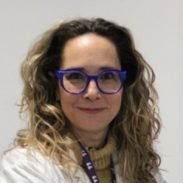
Teresa Giráldez
Teresa Giráldez is Full Professor of Physiology and Head of the Physiology Division at the Medical School of the University of La Laguna (Spain). Trained in Biophysics, Physiology and Neuroscience, she obtained her PhD at the University of Oviedo and completed postdoctoral training at Yale University in the laboratory of Fred Sigworth. She has worked for more than 25 years on ion channels, combining structure–function approaches with physiological studies in cellular systems and animal models.
Since establishing her independent laboratory in 2008, her research has focused on the molecular and physiological mechanisms regulating BK potassium channels, neuronal excitability and synaptic plasticity. Her work provided the first direct description of structural rearrangements of BK channels in intact membranes and uncovered novel functional interactions between BK and NMDA receptors in neuronal signaling and plasticity. Her laboratory combines electrophysiology, imaging, super-resolution microscopy, fluorescent probes and advanced molecular approaches to study ion channel macrocomplexes and calcium nanodomains in the brain.
Prof. Giráldez has coordinated several competitive national and international research projects, including an ERC Consolidator Grant (NANOPDICS), and has published extensively in leading journals such as PNAS, eLife, Journal of Neuroscience, Cerebral Cortex, Neurobiology of Disease and Journal of General Physiology. She has also contributed review articles, book chapters and methodological developments in patch-clamp fluorometry and advanced imaging techniques.
She maintains a broad international collaborative network with leading scientists in the fields of ion channels and neuroscience, including collaborations with NIH, Cornell, UC Irvine, the Humboldt University of Berlin and Cold Spring Harbor Laboratory. She has been invited as keynote speaker, symposium chair and lecturer at numerous international meetings and institutions, including Gordon Research Conferences, the Biophysical Society, EMBO/FEBS Workshops, CECAM Symposia, the Society of General Physiologists, and research institutions such as NIH, Weill Cornell Medicine, i3S Porto, the Medical University of Innsbruck and the University of Marseille.
Prof. Giráldez has extensive leadership and service experience within the scientific community. She is currently Secretary of the Biophysical Society (USA), Associate Editor of The Journal of General Physiology, Reviewing Editor at eLife, and permanent instructor and co-director of the Cold Spring Harbor Laboratory course “Ion Channels in Synaptic Function and Neuronal Circuits”. She has previously served on the executive councils of the Spanish Biophysical Society and the Spanish Neuroscience Society, as well as on national and international grant evaluation panels.
She has also played a major role in the organization of scientific meetings and training activities, serving as Chair of the Ion Channels Gordon Research Conference (2024), President of the organizing committee of the 2027 Meeting of the Spanish Biophysical Society, organizer of the international meeting “Doing Biology with Light”, and member of the organizing committees of major conferences including the Biophysical Society Annual Meeting, Protein Society Meeting and IBRO-SENC Congress.
Throughout her career, she has received numerous distinctions, including the ERC Consolidator Grant, the L’Oréal-UNESCO For Women in Science Award (Spain), the Margaret Oakley Dayhoff Award from the Biophysical Society, the Manuel Rico-Bruker National Award from the Spanish Biophysical Society, and the Honorary Citizen recognition from the Island Government of Tenerife. She is also strongly committed to mentorship, scientific outreach, and the promotion of women in science.
Prof. Giráldez has also developed an extensive mentoring and teaching activity, having supervised numerous PhD, Master’s and undergraduate students, as well as postdoctoral researchers. Many of her former trainees currently hold positions in leading international research institutions and industry. She is strongly committed to fostering scientific careers, promoting diversity and supporting women in science through mentoring, outreach and training initiatives.
Candidato para la Tesorería
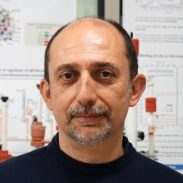
José María de Pereda
José María is a group leader at the Salamanca Cancer Research Center (CIC, CSIC-University of Salamanca), where he investigates the structural and functional basis of protein complexes involved in cell adhesion and signaling. He obtained his degree in Pharmacy (1990) and his PhD (1995) from the Complutense University of Madrid. He carried out his doctoral research under the supervision of Prof. José Manuel Andreu at the Margarita Salas Center for Biological Research (CIB-MS, CSIC), focusing on the structural organization of microtubules and gaining early training in protein biochemistry and biophysics.
He subsequently pursued postdoctoral training at leading international institutions, including the University of Vienna (Austria), the University of Leicester (UK), and the Sanford Burnham Prebys Medical Discovery Institute (La Jolla, USA), where he specialized in structural biology of integrins and associated proteins, with a primary focus on X-ray crystallography.
In 2003, José María established his independent research group at the Salamanca Cancer Research Center as a Ramón y Cajal fellow. He was appointed Tenured Scientist (Científico Titular) at the Spanish National Research Council in 2006 and promoted to Research Scientist (Investigador Científico) in 2021. He has made significant contributions to understanding the structural basis of the assembly of hemidesmosomes, which are integrin-based cell adhesion complexes. He also studies regulatory mechanisms of Rap1-mediated signaling and their alterations in cancers. More recently, his work has expanded to investigate how maternal anti-integrin alloantibodies affect integrin function.
His research is highly interdisciplinary, integrating structural biology methods—such as X-ray crystallography, SAXS, and cryo-EM—with biochemical and biophysical approaches, as well as cellular models. He has secured competitive funding as principal investigator, including seven national and four regional research grants.
José María is committed to training and mentoring young scientists. He has supervised eight completed PhD theses and eleven Master’s projects. He contributes to graduate teaching in the Master’s programs “Biology and Clinic of Cancer” and “Molecular and Cellular Biology,” as well as the PhD program “Cancer Biology and Clinical Practice” at the University of Salamanca. Since 2024, he serves as Scientific Head of the Proteomics Unit at the Salamanca Cancer Research Center.
Candidatos para dos puestos de Vocales
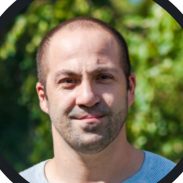
Adai Colom
Adai’s research activities focus on the field of cell membrane biophysics and intracellular trafficking. He completed my doctoral thesis in Structural Biology at the Institut Curie and Aix-Marseille University (France) under the supervision of Dr. Simon Scheuring. During his PhD, he developed the first High-Speed Atomic Force Microscopy combined with optical setups, which enabled the acquisition of first molecular movies of membrane proteins in living cells. This work provided direct evidence of the importance of junctional microdomains in tissue integrity.
Subsequently, he moved to the University of Geneva as a Postdoctoral Fellow in the laboratory of Dr. Aurélien Roux. During this period, he developed novel methods to study cell trafficking and membrane mechanics, applying them to both in vitro and cellular models. A primary outcome of this work was the development of a fluorescent probe to monitor membrane tension via fluorescence lifetime (FLIM), demonstrating a physical link between membrane tension and lipid phase separation.
In 2020, he obtained a Ramón y Cajal and an Ikerbasque Research Fellowship, enabling him to establish his independent group at the UPV/EHU and the Instituto Biofisika in Bilbao. Since establishing the laboratory, a central pillar of the research involves the ESCRT protein machinery, with a particular emphasis on characterizing how proteins such as Vipp1 and PspA interact with lipid bilayers to facilitate membrane restructuring.
This expertise in membrane dynamics has recently expanded into the study of nuclear envelope repair, aiming to uncover the fundamental mechanisms that maintain organelle integrity and the interaction of nanoplastics with lipid membranes.
He actively participates in the organization of scientific networks and events. He co-founded the Geneva Postdocs Association and, more recently, established the «Basque Biomechanics Consortium (BBC)» and the «Basque Biophysics Konsortium (BBK)» with Prof. Jerome Solon to foster inter- group cooperation in the Basque Country.
Since 2020, he has co-organized the «Work in Progress» sessions at the Institute of Biophysics. His experience in event management includes organizing AFM BioMed (Paris 2011), Postdoc Day (Geneva 2019), and the 8th Iberian Biophysics Congress (Bilbao 2022).
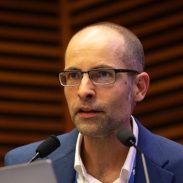
David de Sancho
Dr. David De Sancho is a tenured research professor at the Faculty of Chemistry, University of the Basque Country, and an affiliated researcher at the Donostia International Physics Center. With a research career spanning over two decades, his work centres on computational biophysics, specifically the study of protein folding, function, and dynamics through molecular simulation techniques. He has made significant contributions to understanding protein energy landscapes and their mechanistic underpinnings, combining theoretical modelling with molecular simulation methods.
Dr. De Sancho earned dual degrees in Chemistry (1999) and Biochemistry (2003) and completed a PhD in Theoretical and Computational Chemistry at Universidad Complutense de Madrid in 2007. His doctoral research under Prof. Antonio Rey focused on using genetic algorithms to evaluate coarse-grained models of protein folding, resulting in several first-author publications. Following this, he worked with Prof. Víctor Muñoz at the Spanish Research Council (CIB-CSIC), developing models that highlighted the role of size scaling in protein folding kinetics (JACS, 2009), findings that have informed a broader understanding of biophysical folding principles. Supported by a FEBS Long-Term Fellowship, Dr. De Sancho joined Dr. Robert Best’s lab at the University of Cambridge, where he expanded his research into molecular dynamics (MD) simulations and Markov state modelling. Key outcomes of this work include elucidating folding rates of alpha-helices (JACS, 2011), revealing the molecular origin of internal friction in proteins (Nat. Commun., 2014), and identifying gas diffusion tunnels in hydrogenases (Nat. Chem., 2017).
Upon his return to Spain, Dr. De Sancho secured an Ikerbasque Research Fellowship and conducted research at CIC nanoGUNE. He led groundbreaking studies integrating theory and simulation with single-molecule force spectroscopy experiments, in collaboration with Raul Pérez Jiménez, yielding high-impact publications (e.g., Nat. Struct. Mol. Biol., 2017). Subsequently, as a Ramón y Cajal Fellow, he established an independent group within the Donostia Theoretical Chemistry Laboratory. His group has addressed fundamental questions in protein dynamics, binding, and phase separation using state-of-the-art simulations.
Dr. De Sancho has authored over 60 scientific publications, many as corresponding author, in top-tier journals across chemistry, biophysics, and molecular biology. His work has garnered significant visibility and influence within the field. He has supervised numerous research trainees, including eight PhD theses (five completed, three ongoing), and mentored many undergraduate and master’s students. His research has been supported by competitive national and international grants from institutions such as the Spanish Ministry of Science, Ikerbasque and PRACE.
He is actively engaged in the scientific community, having organized and co-chaired multiple conferences and workshops—including events supported by CECAM and the European South Atlantic Biophysics Congress—and has presented his work globally. His collaborative network includes esteemed researchers across institutions such as NIH, CNRS, UCL, and IIT Chennai, reflecting a strong international footprint.
In addition to his research, Dr. De Sancho is committed to outreach and scientific communication, contributing to the broader dissemination of scientific knowledge. His professional trajectory is marked by sustained excellence, innovation, and leadership in the field of protein biophysics and computational chemistry.
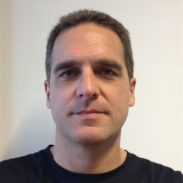
Adrián Velázquez Campoy
Adrián earned his Ph.D. in Physics in 1998 at the Department of Applied Physics at the University of Granada under the supervision of Miguel Cabrerizo Vílchez and Obdulio López Mayorga. The goal of his doctoral thesis was the construction of an isothermal titration calorimeter for the study of protein adsorption on functionalized polystyrene nanoparticles. During his postdoctoral stage (1998–2003) in Ernesto Freire’s laboratory in the Department of Biology at The Johns Hopkins University (Baltimore, USA), he learned protein expression and purification techniques and applied calorimetric techniques to the study of the interaction of HIV-1 protease with clinical and second-generation experimental inhibitors, participating in the development of a new paradigm for the development of selective drugs against variable targets in which the asymmetry of functional groups and the interaction enthalpy play key roles. He also initiated a drug discovery project to target the SARS-CoV-1 3CLpro protease.
Upon his return to Spain in 2003, he joined the Institute BIFI (University of Zaragoza) as a Ramón y Cajal researcher, where he started a research line on Biomolecular Interactions to: 1) develop methodologies and procedures based on calorimetric and spectroscopic techniques to study the conformational and functional landscape of proteins; 2) study allosteric and cooperative interactions in proteins; and 3) identify bioactive compounds for drug development (orthosteric and allosteric inhibitors, rescuers, and stabilizers) against folded, conditionally disordered, and intrinsically disordered target proteins. Following his contract as ARAID researcher (Government of Aragon) and obtaining an Associate Professor position, he is currently Full Professor of Biochemistry and Molecular Biology at the University of Zaragoza.
In 2017, he was appointed as corresponding academic member (Biotechnology section) of the Royal National Academy of Medicine of Spain. Since 2018, he has been director of ZCAM (Zaragoza Scientific Center for Advanced Modeling), the Spanish node of CECAM (Centre Européen de Calcul Atomique et Moléculaire). Since 2015, he has been actively involved in the European ARBRE Network (Association of Resources for Biophysical Research in Europe). He is editor-in-chief of the journal Protein Expression and Purification since 2024.